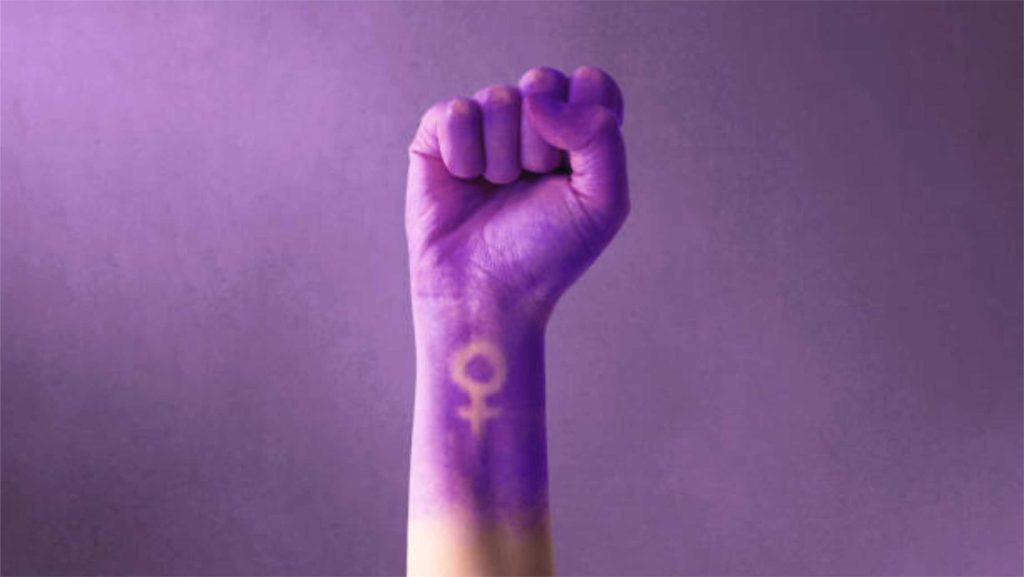
Feminism is first and foremost a belief—a belief that women should be treated the same way as men and accorded the same rights, powers, and opportunities. Feminism is also a movement—a movement that advocates for political, economic, and social equality of the sexes. The feminist movement has the sole objective of promoting women’s rights and interests; but over many centuries and decades, the concept of feminism has morphed significantly, taking on various shapes, colours and shades. When we take a ‘Closer Look’ at Feminism, we become compelled to ask pertinent questions: ‘Can feminism still be regarded as pure advocacy, or has it become a slogan for rivalry and rebellion?’ ‘Is feminism still a movement for liberating women or has it become a mechanism for repressing men?’ ‘Should the end goal of feminism be to achieve gender equality, or should it be to establish gender equity?’
Leadership experts assert that everything rises and falls on leadership. This assertion implies that the success or failure of any endeavor depends solely on the quality of its leadership. People who belong to this school of thought say that no matter how terrible a situation or system is, or no matter how backward or depraved a people have become, positive change will begin the moment the right leader takes the helm. But there are some others who disagree with this point of view; they argue that no matter what good intentions a leader may have, positive change will not happen unless the people themselves are willing to change. In this article, we will be dissecting these two contrasting leadership paradigms, exploring historical and contemporary examples whilst also drawing wisdom and inspiration from the word of God.
“If the foundation is destroyed, what can the righteous do?” The righteous in the context of nation building is that man with good intentions; he is the noble statesman, the upright administrator; the leader with the ambition to set things right—to restore law and order and bring smiles to the faces of the people. It is believed that when the righteous are in authority, the nation will rejoice. But still we must ask, “Are there situations in real life where the righteous is incapacitated from doing good?” Are the cases where a man with good intentions is completely overwhelmed and unable to perform? Are there situations that have become so irredeemable that no leader, however good or wise, can salvage? Are there nations beyond redemption? And if there are indeed cases where the righteous CAN do nothing; in such cases (if they do exist) what exactly SHOULD the righteous do?”
Conversations about virginity are rarely had these days; and when they are, they are had in whispers. Promiscuity has become so popular that eulogies about chastity have become muffled. Virginity is something mothers now rarely discuss their daughters—something fathers almost never discuss with their sons. Even in schools and religious settings, the subject is almost treated like a taboo. In times past, losing one’s virginity was considered as folly; it was akin to casting one’s pearls before swine. But today, promiscuity is praised and virginity is despised; the promiscuous are regarded as wise and the chaste are regarded as timid. Has virginity therefore lost its glory? Has it become a relic of the past—something belonging to the olden days and therefore irrelevant in the modern world? Has remaining a virgin until marriage become obsolete, or was it just a fad all along?
Polygamy is the practice of having more than one spouse at the same time. In certain cultures, and in some religions, polygamy is permissible—even praised. But in some countries, the practice is illegal; and in some religions, it is abominable. Interestingly, there have been new conversations regarding the nature and practicality of polygamy, even in Christian circles. These conversations, which appear to be spawning proponents, compel us to bring certain questions to the fore. Is polygamy really as beautiful as it is often portrayed, or are these portrayals merely a deceitful cloak? What truly lies beneath the roof of the polygamous home? What conversations are muffled within the walls? Are there squabbles? Are there rifts? Is there jealousy and strife? Is there malice? Is there hate? Are there whispers and stifled emotions? Is there misogyny and abuse? Are there resentments and regrets? To what extent can polygamy be tolerated? To what limits can the matrimonial bed be shared? And most importantly, what really is the Bible’s standpoint on the subject.